
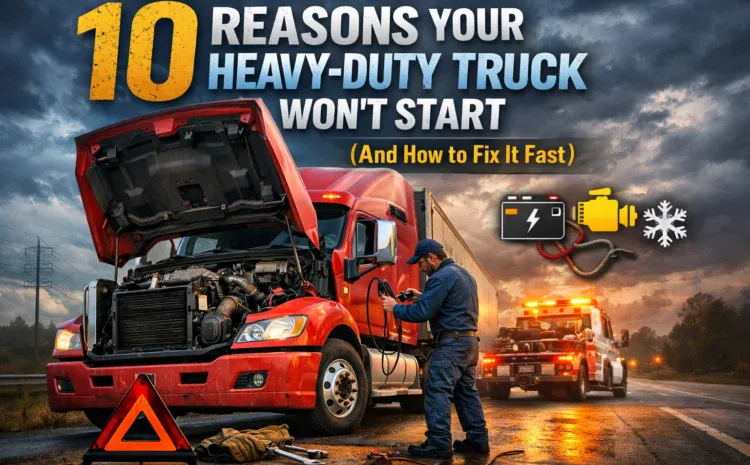
10 Reasons Your Heavy-Duty Truck Won’t Start (And How to Fix It Fast)
In the world of logistics and heavy-duty transport, time is literally money. Every minute your truck sits idle in a lot or on the shoulder of a highway is a minute of lost revenue, delayed deliveries, and potential hits to your professional reputation. When you turn the key or push the start button and hear nothing but a click: or worse, total silence: the pressure mounts immediately.
Understanding why your heavy-duty truck won’t start is the first step toward minimizing downtime and maintaining operational stability. While some issues require the specialized tools of a semi truck mechanic near me, others can be diagnosed or even resolved quickly if you know what to look for.
In this guide, we break down the top 10 reasons for starting failures and provide actionable solutions to get your fleet back in motion.
1. Dead or Weak Batteries
The most common culprit is often the most obvious. Heavy-duty trucks require immense Cold Cranking Amps (CCA) to turn over large displacement diesel engines. Over time, batteries lose their ability to hold a charge, especially when subjected to extreme temperature fluctuations or long periods of vibration.
The Fix:
Check the battery voltage with a multimeter; it should read at least 12.6V for a full charge. If you’re getting a clicking sound, your batteries likely lack the amperage to engage the starter. If you are stuck on the road, our mobile semi truck repair team can provide a high-output jump-start or on-site battery replacement to restore your power immediately.
2. Corroded or Loose Battery Terminals
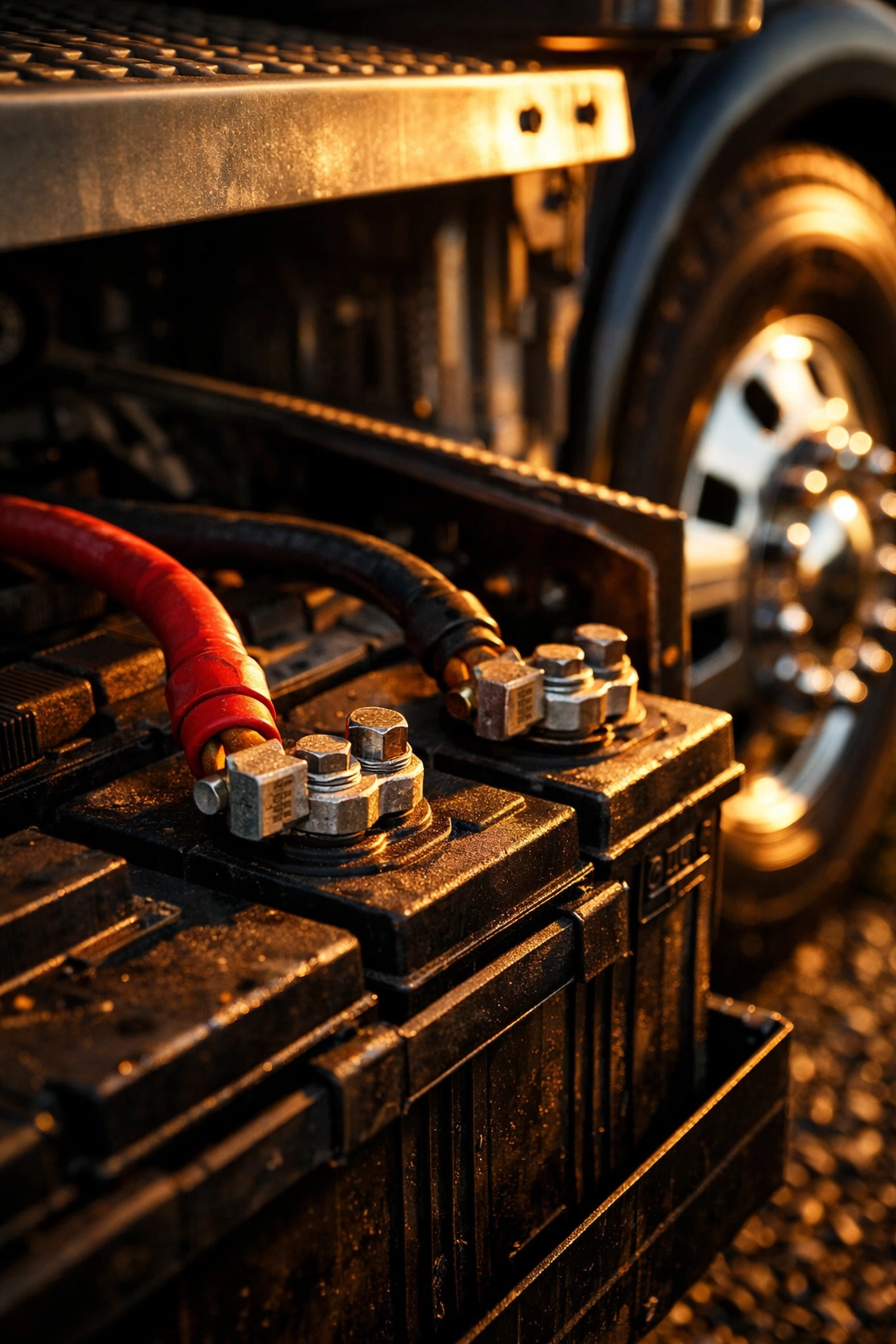
Even a brand-new battery can’t do its job if the connection is compromised. Corrosion: that white or green powdery substance: acts as an insulator, preventing electricity from flowing to the starter motor. Similarly, the high vibration of heavy-duty operations can rattle terminals loose over thousands of miles.
The Fix:
Inspect the cables for tightness. If you see corrosion, disconnect the terminals and clean them with a wire brush and a neutralizing solution (like baking soda and water). Keeping these connections clean is a core part of routine maintenance that prevents emergency breakdowns.
3. Blown Fuses or Faulty Relays
Modern trucks are essentially computers on wheels. The ignition circuit relies on several fuses and relays to send the signal from your key to the starter solenoid and the fuel pump. A single blown 20-amp fuse can effectively “brick” a half-million-dollar machine.
The Fix:
Locate your truck’s primary fuse panel and check the diagrams for “Ignition,” “Starter,” or “ECM” fuses. Replace any visible blown fuses with the exact same amperage. If a fuse blows again immediately, you have an electrical short that requires professional heavy duty truck repair near me.
4. Faulty Starter Motor
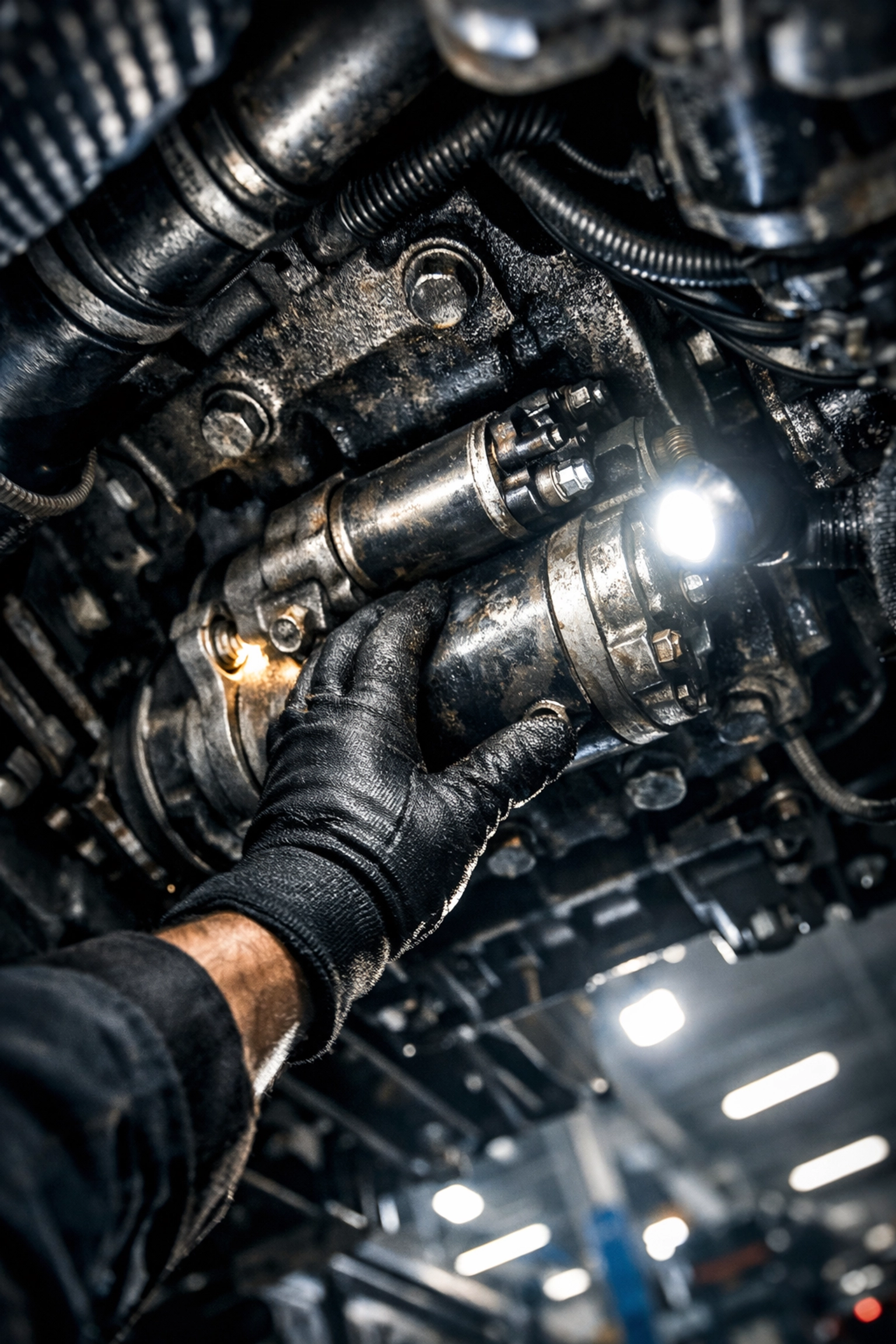
The starter motor is a high-torque electrical motor that physically cranks the engine. Because it handles so much current, the internal brushes and solenoids eventually wear out. If you hear a single loud “clunk” when trying to start, or if the starter spins without engaging the engine, the unit has likely failed.
The Fix:
While the “hammer tap” trick might work once in a desperate situation to jar the brushes into contact, it’s not a repair. A failing starter motor requires professional replacement. At Schimpfs Garage LLC, we specialize in high-quality engine and performance repairs to ensure your starting system is robust and reliable.
5. Bad Ignition Switch
If you turn the key and the dashboard lights don’t even flicker, or if the lights come on but nothing happens in the “Start” position, the ignition switch itself may be the problem. The mechanical tumblers or electrical contacts inside the steering column can fail after years of use.
The Fix:
Try wiggling the key while turning or checking if other electrical accessories (like the radio or fans) work. If the switch is dead, it will need to be replaced by a qualified technician to ensure the security and anti-theft systems are properly synced.
6. Clogged Fuel Filters
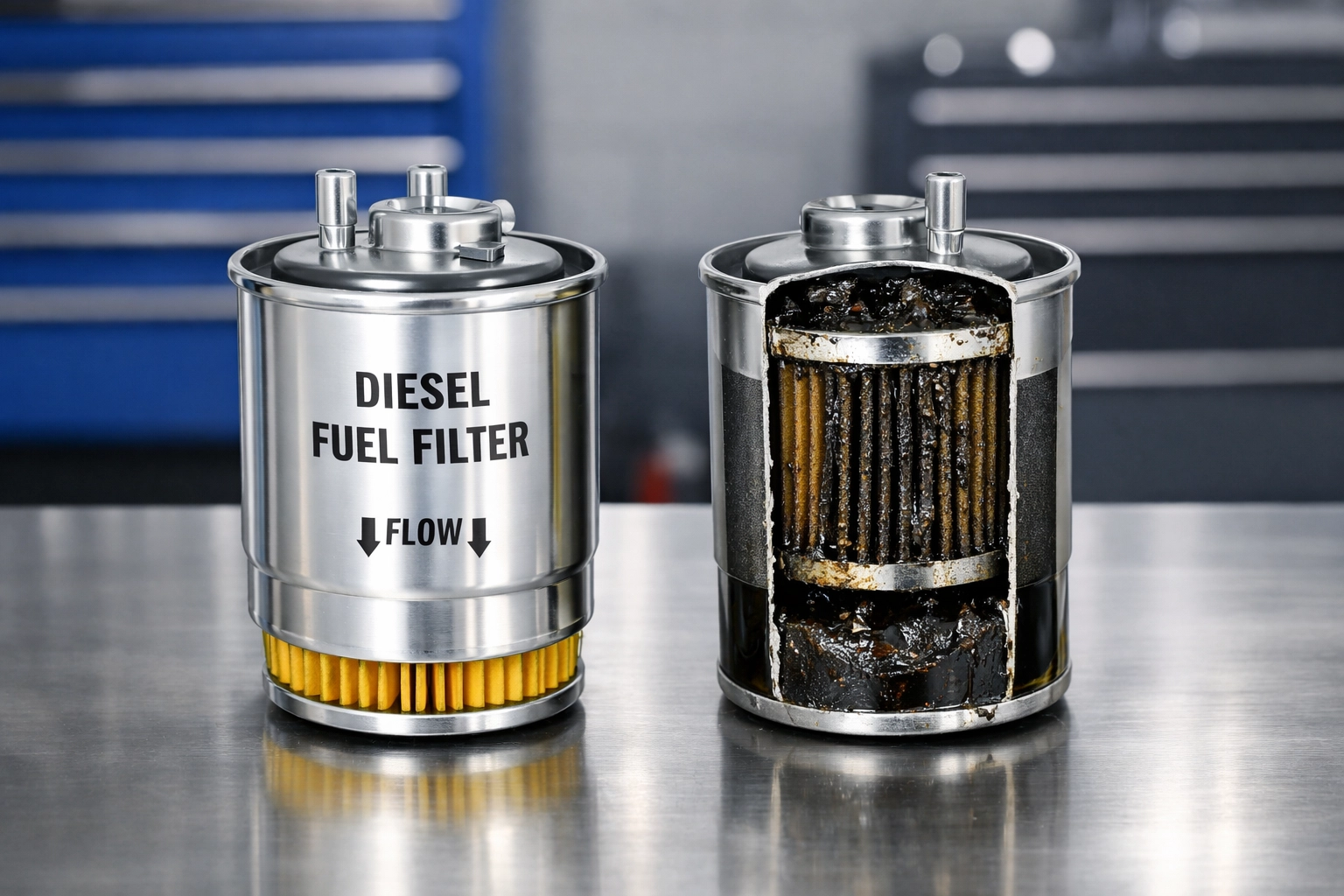
Diesel engines are incredibly sensitive to fuel purity. If your fuel filters are clogged with contaminants or “gelled” up in cold weather, the engine won’t receive the fuel it needs to combust. This often manifests as an engine that “cranks and cranks” but never actually fires up.
The Fix:
Replace your fuel filters according to your manufacturer’s schedule: typically every 20,000 to 40,000 miles. Carrying spare filters on the truck is a standard industry “best practice.” If you suspect fuel delivery issues, our team can perform a full diagnostic on your engine performance.
7. Failing Fuel Pump
If the filters are clean but the engine still won’t start, the fuel pump may not be generating enough pressure. In a heavy-duty diesel system, the pump must move fuel at high pressure to the injectors. A pump failure is a “hard stop” for any fleet operation.
The Fix:
This is a complex mechanical failure. A professional semi truck mechanic near me will use pressure gauges to verify pump output. Preventing this starts with using high-quality fuel and ensuring your oil coolers and cooling systems are keeping engine temperatures within optimal ranges to prevent pump wear.
8. Air in the Fuel Lines
Diesel fuel systems must be airtight. If air enters the lines: often after a filter change or if a line has a small crack: the injectors will spray air instead of fuel. Since air is compressible and fuel is not, the combustion cycle is broken.
The Fix:
The system must be “bled” to remove the air pockets. Most modern trucks have a hand primer pump located near the fuel filter housing. Pumping this until it becomes firm can often resolve the issue, but if air continues to enter the system, you need an inspection of the entire fuel line assembly.
9. Electronic Control Module (ECM) and Sensor Failures
Your truck’s ECM is the brain of the vehicle. It monitors sensors like the Crankshaft Position Sensor and the Camshaft Sensor. If these sensors fail, the ECM doesn’t know when to fire the injectors, and as a safety precaution, it will prevent the engine from starting.
The Fix:
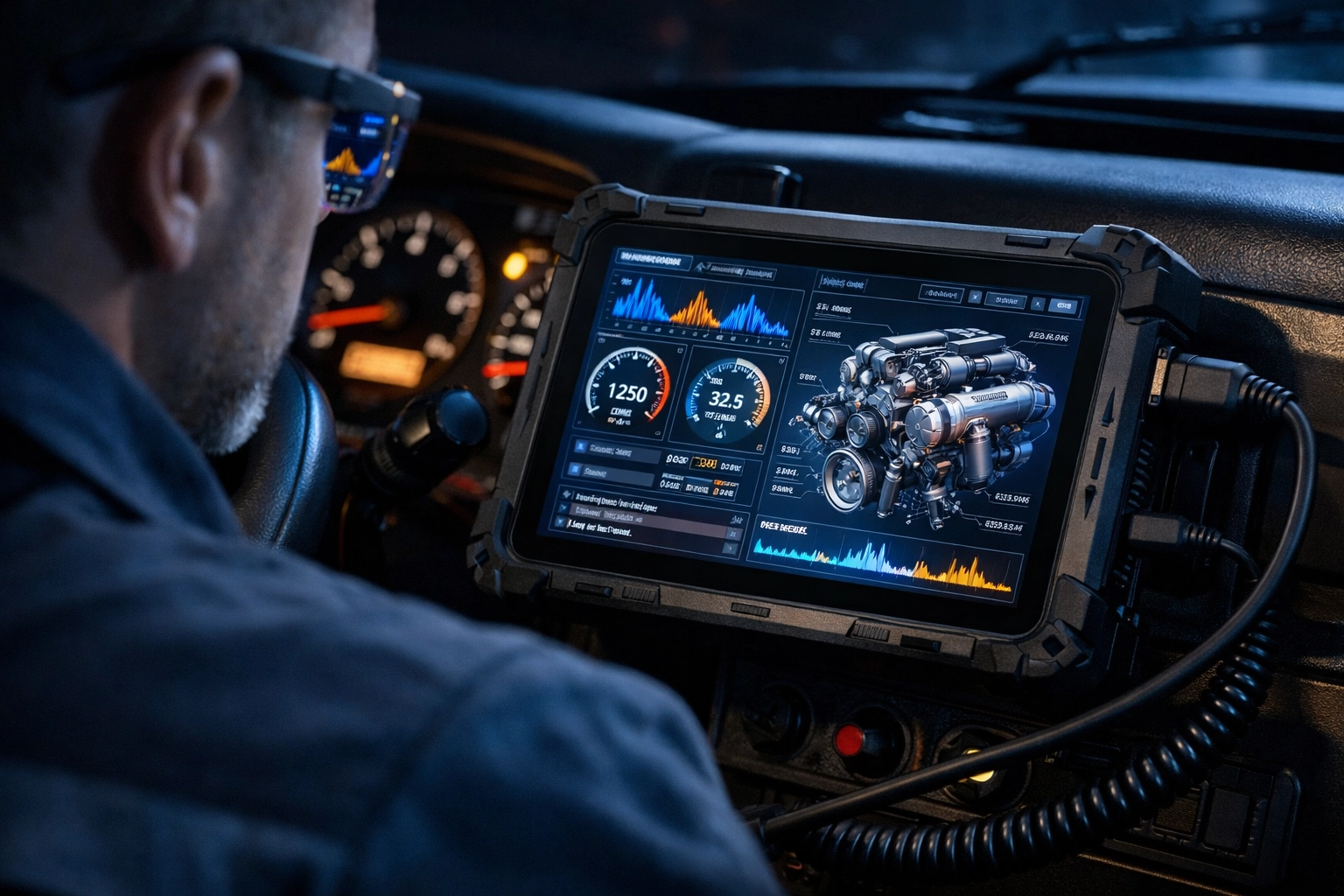
This requires advanced computer diagnostics. Schimpfs Garage LLC utilizes state-of-the-art diagnostic software to “read” the ECM and identify exactly which sensor is misreporting. This data-driven approach saves you from the “parts cannon” method of repair, ensuring we fix only what is broken.
10. Aftertreatment and Air Intake Issues
In modern heavy-duty trucks, the exhaust and aftertreatment systems are integrated into the starting logic. If your DPF (Diesel Particulate Filter) is severely plugged or if an EGR valve is stuck wide open, the backpressure or lack of clean air can prevent the engine from breathing well enough to start.
The Fix:
Check your dash for “Regen” lights or “Derate” warnings. Issues with heavy-duty aftertreatment systems are a leading cause of modern truck downtime. Regular cleaning and maintenance of the DPF, SCR, and DOC systems are essential for long-term reliability.
Why Professional Diagnosis Matters
While the list above covers the most common issues, a heavy-duty truck is a complex synergy of mechanical and electronic systems. Misdiagnosing a starting issue can lead to unnecessary expenses and extended downtime.
At Schimpfs Garage LLC, we view ourselves as your strategic partner in maintenance. Whether you need a mobile semi truck repair on the side of the road or a comprehensive general maintenance inspection in our shop, we focus on high-ROI solutions that keep your wheels turning.
Strategic Advantages of Choosing Schimpfs Garage LLC:
- Mobile Expertise: We bring the shop to you, reducing towing costs and getting you back on route faster.
- Advanced Diagnostics: We find the root cause, not just the symptom.
- Full-Service Capability: From turbochargers to transmission and driveline work, we handle the entire vehicle.
- Reliability: Our brand is built on the trust of fleet owners who can’t afford to wait.

Secure Your Fleet’s Uptime
Don’t let a “no-start” condition derail your week. Understanding these ten points helps you communicate more effectively with your mechanic and, in some cases, solve the problem on the spot. However, for the complex electrical and mechanical failures that govern modern heavy-duty trucking, professional intervention is a must.
If you are looking for a reliable heavy duty truck repair near me or need immediate assistance from a semi truck mechanic near me, contact Schimpfs Garage LLC today. Let’s get your truck back on the road where it belongs.
Contact Us Today for Emergency Service or Routine Maintenance