
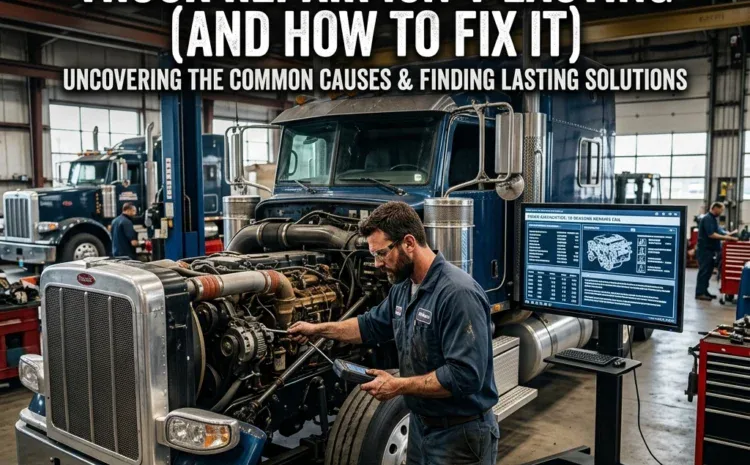
10 Reasons Your Heavy Duty Truck Repair Isn’t Lasting (and How to Fix It)
In the world of heavy-duty trucking, downtime is the enemy of profitability. When a truck is in the shop, it isn’t making money; it’s costing money. However, what is even more damaging than a scheduled repair is a recurring failure. If you find your rig back in the bay for the same issue just weeks after a “fix,” you are dealing with a cycle of inefficiency that drains your bottom line.
At Schimpfs Garage LLC, we understand that a repair is only as good as the time it keeps you on the road. Lasting repairs require more than just swapping out a part; they require a strategic approach to maintenance and diagnostics.
In this guide, we will break down the top 10 reasons your heavy-duty truck repairs aren’t lasting and provide actionable strategies to ensure your fleet stays operational for the long haul.
1. Treating the Symptom, Not the Root Cause
One of the most common reasons a repair fails is that the mechanic addressed the “what” but ignored the “why.” For example, if a radiator hose bursts, simply replacing the hose is a temporary fix. If the root cause was an over-pressurized cooling system due to a failing head gasket, that new hose will eventually fail too.
The Fix: Always demand a comprehensive diagnostic. Whether it’s an issue with your engine or exhaust performance, our team looks upstream and downstream of the failure point to ensure the underlying cause is neutralized.
2. Neglecting Preventive Maintenance (PM)
A repair is often the final stage of a long-neglected maintenance issue. If you are only fixing things when they break, those repairs are being performed on a system that is already stressed and degraded. Fresh parts installed into a neglected system are prone to premature wear.
The Fix: Transition from a reactive mindset to a proactive one. Implementing a strict schedule for general maintenance and inspections ensures that your components are operating in an optimal environment, which significantly extends the life of any new repairs.

3. Using Substandard or “Value” Parts
In an effort to save on immediate costs, many fleet owners opt for aftermarket parts that don’t meet OEM specifications. While the initial invoice might look better, these parts often lack the durability required for heavy-duty applications. A “cheap” part that fails in six months is twice as expensive as a quality part that lasts three years.
The Fix: Invest in high-quality components. At Schimpfs Garage LLC, we prioritize parts that offer the best ROI through longevity and reliability. This is especially critical for high-wear areas like brakes, suspension, and steering.
4. Fluid Contamination and Poor Filtration
Heavy-duty engines and transmissions rely on clean, high-quality fluids to manage heat and friction. If a repair involves opening a system: like the transmission or driveline: and any dirt, moisture, or old metal shavings remain, the new components will be compromised almost immediately.
The Fix: Ensure that every repair involves a complete flush and the installation of premium filters. Contaminated diesel fuel or old coolant can destroy a new engine or fuel system faster than you might think.
5. Ignoring Electrical System Health
Modern heavy-duty trucks are rolling computers. Frequently, mechanical failures are actually triggered by electrical ghosts. A corroded ground wire or a weak battery can cause sensors to send incorrect data to the ECM, leading to poor performance or “limp mode” even after mechanical parts have been replaced.
The Fix: Every major repair should include an inspection of the electrical and battery systems. Addressing corrosion and ensuring stable voltage is the only way to make modern repairs stick.

6. Overlooking Alignment and Suspension Geometry
You can put a brand-new set of tires on a truck, but if the axles are misaligned, those tires will be shredded in a matter of months. Similarly, worn bushings or shocks can put undue stress on a newly repaired drivetrain.
The Fix: After any major chassis or tire work, a professional tire, wheel, and alignment service is mandatory. Proper alignment reduces rolling resistance, saves fuel, and prevents the “cascading failure” of suspension components.
7. Improper Post-Repair “Break-In” and Driver Habits
Sometimes, the repair was perfect, but the way the truck was handled immediately afterward caused the failure. Heavy-duty components, particularly in the engine and transmission, often require a specific break-in period. Additionally, aggressive driving: such as hard braking or rapid acceleration: puts immense strain on new parts.
The Fix: Educate drivers on the importance of “gentle” operation following major service. Monitoring driver behavior through fleet services data can help identify habits that are killing your equipment’s lifespan.
8. Inadequate Diagnostic Tools
The days of “wrench-turning by ear” are over. If a shop uses outdated diagnostic software, they may miss subtle fault codes that indicate a larger problem. An incomplete diagnosis leads to incomplete repairs.
The Fix: Work with a shop that invests in the latest diagnostic technology. At Schimpfs Garage LLC, we use advanced tools to interface with American, German, and European heavy-duty systems, ensuring we have the full picture before we ever pick up a wrench.

9. Failure to Document and Track Service History
Without a clear service history, it’s impossible to spot patterns of failure. If you don’t know that a specific truck has had three alternator replacements in two years, you won’t know to look for the short circuit that is killing them.
The Fix: Maintain meticulous records. We help our clients in Camden County and Gloucester County track their service history to identify recurring issues and implement long-term fixes rather than band-aid solutions.
10. Lack of Specialization in Heavy-Duty Systems
A shop that primarily works on passenger cars might not have the specialized equipment or the “heavy-duty mindset” required for semi-trucks. The torque specs, tolerances, and sheer scale of heavy-duty components require a different level of expertise.
The Fix: Choose a dedicated heavy-duty partner. Schimpfs Garage LLC is a leader in automotive repair in Somerdale, NJ, with a specific focus on the heavy-duty sector. We understand the unique pressures placed on commercial rigs and the high stakes of interstate hauling.

The Bottom Line: Stability Over Speed
In the heavy-duty industry, the fastest repair is rarely the best repair. Real efficiency comes from reliability. When you prioritize root-cause analysis, quality parts, and strategic maintenance, you stop paying for the same repair twice.
By understanding these 10 common pitfalls, you can better manage your fleet and ensure that your investment in maintenance yields a maximum return in uptime and safety.
Partner with Schimpfs Garage LLC
Whether you are an owner-operator or a fleet manager responsible for dozens of units, you need a repair partner who values your uptime as much as you do. From tire sales to complex engine overhauls, we provide the expertise needed to keep your trucks moving across New Jersey and beyond.
Ready to break the cycle of recurring repairs? Contact us today to schedule a consultation or an inspection. Let’s build a maintenance strategy that keeps your business on the road.