
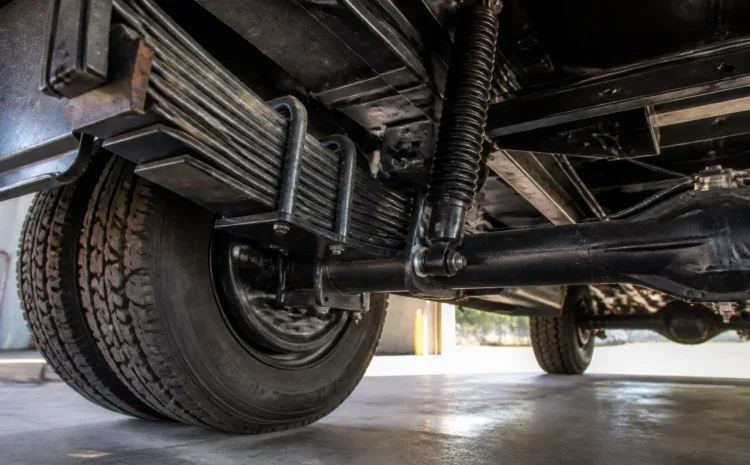
The Critical Role of Suspension Maintenance in Heavy-Duty Safety
For many owner-operators and fleet managers throughout the tri-state NJ area, the suspension system is often treated as a “background” component. As long as the truck isn’t leaning visible to one side or bouncing like a trampoline over every pothole on the Turnpike, it’s easy to assume everything is fine. We tend to prioritize the engine because it’s the heart of the power, or the brakes because they are the final line of defense. However, treating suspension maintenance as a secondary concern is a dangerous gamble.
At Schimpfs Garage LLC, we’ve spent over 60 years combined seeing what happens when heavy-duty suspensions are neglected. It’s not just about a bumpy ride; it’s about the physics of stopping 80,000 pounds and the physical toll it takes on the person behind the wheel. Moving beyond just “fixing what’s broken” means understanding that your shocks, struts, and leaf springs are active safety components that dictate how your truck handles an emergency.
The Invisible Link: Suspension and Your Braking Distance
Most drivers are surprised to learn that their braking performance is directly tied to their suspension. While your brake pads and drums provide the stopping force, your suspension is responsible for keeping the tires firmly planted on the pavement. If your shocks are worn, your tires can actually “hop” or lose consistent contact with the road surface, especially during hard braking or on uneven surfaces.
When a tire isn’t touching the ground, it isn’t creating friction. When it isn’t creating friction, it isn’t stopping the truck. Research in the automotive industry suggests that even slightly worn shocks can increase stopping distances by 20% or more. For a heavy-duty semi-truck already requiring significant space to come to a halt, adding an extra 30 or 40 feet to that distance can be the difference between a close call and a catastrophic rear-end collision.
Controlling the “Nose Dive”
Heavy-duty suspension systems are designed to manage weight transfer. When you hit the brakes, the weight of the truck shifts forward. A healthy suspension setup resists this “nose dive,” keeping the weight distributed more evenly across all axles. If your front suspension is soft or compromised, excessive diving unloads the rear tires, causing them to lose traction. This imbalance makes it harder for the ABS to function correctly and can lead to jackknifing, particularly for drivers in the tri-state NJ area who often face slick, rain-soaked roads or sudden traffic stops.
Fighting Driver Fatigue from the Ground Up
Safety isn’t just about the truck’s mechanical limits; it’s about the driver’s physical and mental state. Long-haul trucking and local heavy-duty hauling are physically demanding jobs. When a suspension system is worn out, every bump, vibration, and road imperfection is transmitted directly into the cab.
The Physical Toll of Vibration
Constant vibration leads to what’s known as whole-body vibration (WBV) exposure. Over an eight or ten-hour shift, this leads to significant muscle fatigue, lower back pain, and joint stiffness. A driver who is physically uncomfortable is a driver who is more likely to become distracted or experience slower reaction times. By investing in proactive suspension repair for a smooth and safe driving experience, you aren’t just protecting the chassis: you’re protecting the person in the seat.
Mental Workload and Steering Correction
Have you ever felt like you’re “fighting” the truck just to keep it in a straight line? Worn bushings or loose tie rods force the driver to make constant, micro-steering corrections to compensate for the truck’s tendency to wander. This increased mental workload accelerates cognitive fatigue. A driver who has to work twice as hard to maintain lane position is going to wear out much faster than one operating a well-maintained, stable vehicle.

Navigating the Tri-State Challenge
The roads around Somerdale and the broader NJ region are notorious for their variety: from smooth highways to cratered industrial backroads. This environment is particularly harsh on heavy-duty components. A suspension system that might last 150,000 miles in a flatter, more rural area might need attention much sooner here.
We specialize in high-tech solutions like laser alignments to ensure that your suspension geometry is perfect. The role of wheel alignment cannot be overstated; even if your shocks are new, poor alignment will cause “scrubbing,” which ruins tires and creates the very instability that leads to driver fatigue.
Why Proactive Suspension Care Matters
At Schimpfs Garage LLC, we believe in keeping you informed so you’re never left in the dark. Our approach to heavy-duty safety involves a comprehensive look at the entire chassis. Whether it’s installing heavy-duty strut compressors or using OBD1 adapters for older fleet models, we have the tools to handle the job right.
We also understand that downtime is the enemy of any trucking business. That’s why we offer mobile heavy-duty truck repair to bring our expertise directly to you. This proactive maintenance ensures that small issues: like a leaking shock or a cracked leaf spring: don’t turn into a roadside emergency that sidelines your fleet.
Conclusion
Suspension is the unsung hero of heavy-duty safety. By maintaining your shocks, struts, and bushings, you aren’t just ensuring a more comfortable ride; you’re actively reducing your stopping distance and keeping your drivers alert and focused. In the high-stakes world of commercial hauling, these “marginal gains” in safety are what keep your business running and your drivers coming home safe every night.
Don’t wait for a failure to think about your suspension. Whether you need a precision laser alignment or a full suspension overhaul, our team at Schimpfs Garage LLC is ready to help. With our 3-year/36,000-mile warranty and decades of experience, we provide the reliability you need to stay on the road with confidence. Give us a call or visit us in Somerdale today to schedule your next inspection.
Beyond the Engine: Why Your Transmission Needs a Strategic Service Plan

When we talk about heavy-duty truck performance, the engine usually gets all the glory. We discuss horsepower, torque, and fuel economy as if they happen in a vacuum. But without a healthy transmission, all that engine power is effectively useless. In the world of commercial fleets and heavy equipment, the transmission is the workhorse that translates combustion into motion, and it operates under extreme heat and pressure.
At Schimpfs Garage LLC, we often see a recurring pattern: owners who are meticulous about oil changes but treat transmission service as an “optional” or “occasional” task. This reactive mindset: waiting for a slip or a grind to take action: is one of the most expensive mistakes a fleet operator can make. A strategic transmission service plan is about moving from emergency repairs to predictable maintenance.
The Power of Fluid Analysis
The most critical part of any transmission strategy is understanding the condition of the fluid. In heavy-duty gearboxes, the fluid isn’t just a lubricant; it’s a coolant and a hydraulic medium. Over time, heat causes the chemical additives in the fluid to break down. When this happens, the fluid loses its ability to protect the intricate gears and bearings inside the housing.
What the Fluid Tells Us
At our shop in the tri-state NJ area, we don’t just “change” fluid; we analyze it. Looking at a fluid sample can reveal the internal health of the transmission before you ever feel a symptom on the road.
- Dark or Burnt Smell: This is a clear sign of overheating. If the fluid is burnt, the internal seals and clutches are likely being cooked.
- Metal Shavings: While a tiny amount of fine “dust” is normal, larger flakes indicate that a gear or bearing is actively failing.
- Milky Appearance: This usually suggests coolant contamination, often from a leaking internal cooler: a “death sentence” for a transmission if not caught immediately.
By catching these signs early through regular vehicle inspections, we can often perform a targeted repair or a flush that saves you from a $15,000 replacement bill later.
Spotting the Early Warning Signs
A “strategic” plan means training yourself and your drivers to listen to what the truck is saying. Transmissions rarely fail without warning; they usually spend weeks or months giving you hints. If you’re a driver in NJ, you know that heavy traffic and constant shifting put extra strain on the gearbox.
Keep an ear out for these common warning signs of a failing transmission:
- Hesitation or “Searching”: If the truck hesitates before engaging a gear or seems to “hunt” for the right gear while climbing a grade, the sensors or solenoids are likely struggling.
- Unusual Noises: A whine, hum, or clunking sound when shifting is a red flag. In heavy-duty trucks, these sounds often point to worn planetary gears or bearing issues.
- Temperature Spikes: If your dash gauge shows the transmission temperature creeping up during normal loads, your cooling system or the fluid itself is failing to do its job.

Why “Wait and See” Fails for Heavy-Duty Fleets
For a personal vehicle, a transmission failure is an inconvenience. For a commercial fleet operator, it’s a financial disaster. Between the cost of a heavy-duty tow, the loss of a load, the potential for driver downtime, and the price of a remanufactured unit, the “wait and see” approach is the most expensive way to run a business.
Integrating transmission repair and maintenance into your regular fleet schedule allows you to plan for downtime. It’s much easier to have a truck in the shop for a scheduled service on a Tuesday than to have it stranded on the side of I-295 on a Friday afternoon. Our mobile fleet services can even help with some aspects of this maintenance, keeping your fleet moving without requiring a trip to the shop for every minor check.
The Schimpfs Garage Advantage
With over six decades of combined experience, our team at Schimpfs Garage LLC knows the nuances of heavy-duty gearboxes: whether they are manual, automated manual (AMT), or fully automatic. We use advanced diagnostics to communicate with your truck’s computer, checking for “shadow codes” that might not trip a dash light but indicate an impending shift issue.
We are proud to offer a 3-year/36,000-mile warranty on our work, giving you peace of mind that when we service your transmission, it’s done right. Whether you’re running semi-trucks, box trucks, or heavy construction equipment, we treat every gearbox with the precision it deserves.
Conclusion
Your transmission is the bridge between power and progress. Treating it with a strategic service plan: focusing on fluid health, early detection, and proactive maintenance: is the best way to ensure your heavy-duty vehicles stay on the road and out of the graveyard.
If it’s been a while since your last transmission check, or if you’ve noticed a slight change in how your truck shifts, don’t wait for the total swap. Contact Schimpfs Garage LLC today to set up a comprehensive service plan for your heavy-duty vehicles. We’re here to keep you informed and keep your wheels turning throughout the tri-state NJ area.