
How to Tell If Your Fleet’s Tires Are Quietly Draining Your Fuel Budget
Fuel costs are one of the largest ongoing expenses for commercial fleets. While fleet operators often look first at driver behavior, route planning, and engine performance, tires can quietly add to the bill every day.
A truck with low tire pressure, uneven tread wear, or poor alignment has to work harder to move down the road. That extra resistance may not trigger a dashboard warning, but it can show up in lower miles per gallon, shortened tire life, and more frequent roadside repairs.
For fleets operating across New Jersey, Pennsylvania, and Delaware, regular tire inspections and alignment checks are a practical way to control operating costs. Here’s how to recognize when your tires may be draining your fuel budget: and what to do about it.
Why Tire Condition Affects Fuel Economy
Every tire creates some rolling resistance as it moves across the pavement. Rolling resistance comes from the energy required to flex the tire, support the vehicle’s weight, and maintain contact with the road.
When tires are properly inflated and rolling straight, that resistance stays within a normal range. But several tire problems can increase the amount of energy required to keep a truck moving:
- Under-inflation causes excessive sidewall flex.
- Uneven tread wear creates inconsistent contact with the road.
- Misalignment forces tires to scrub instead of rolling straight.
- Aging or damaged tires may have higher rolling resistance.
- Mismatched tires can create differences in drag across an axle.
The engine must overcome that additional resistance. Over thousands of miles, even a small increase in fuel consumption can become a significant fleet expense.
Research from the North American Council for Freight Efficiency and commercial tire manufacturers consistently emphasizes the importance of maintaining correct inflation and selecting tires suited to the application.
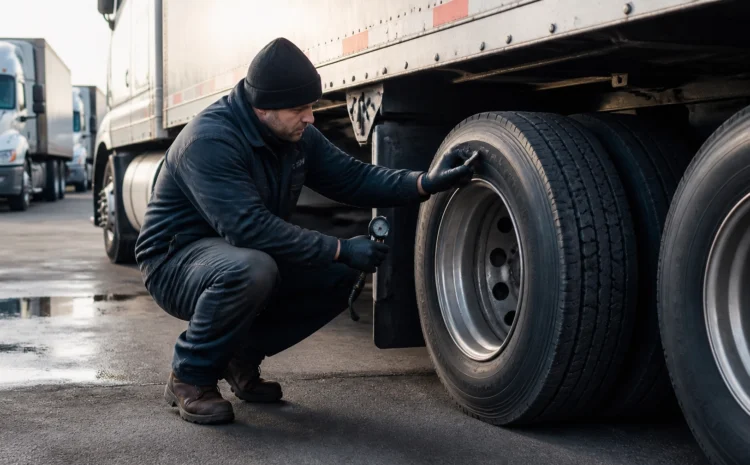
Sign #1: Tire Pressure Is Regularly Below Specification
Under-inflation is one of the most common causes of unnecessary tire drag. When a commercial tire does not have enough air, its sidewalls flex more with every rotation. That flexing creates heat and increases rolling resistance.
A tire that is only a few pounds per square inch below its recommended pressure may not look obviously flat. On a heavy-duty truck, however, a small pressure difference across multiple tires can affect fuel use and tire life.
What fleet operators should monitor
A reliable tire pressure program should include:
- Cold pressure checks on every tire position
- A calibrated pressure gauge or properly maintained tire-pressure monitoring system
- The tire manufacturer’s load-and-inflation recommendations
- Records showing recurring low-pressure positions
- Inspections after puncture repairs or valve-stem issues
Do not rely solely on appearance. Commercial truck tires can be significantly under-inflated without looking obviously damaged. Pressure should be checked when the tires are cold, before extended driving heats the air inside them.
A pattern of tires repeatedly losing pressure may point to punctures, valve problems, wheel damage, or bead leaks. Simply adding air without finding the cause may leave the truck vulnerable to additional wear and fuel waste.
Sign #2: The Tread Is Wearing Unevenly
Tire wear is useful information. It can reveal whether a truck is being operated with incorrect pressure, worn suspension components, or an alignment problem.
Common patterns include:
- Shoulder wear: Often associated with under-inflation or incorrect loading.
- Center tread wear: May indicate over-inflation.
- Feathering: Tread blocks feel smoother in one direction than the other and may point to toe or alignment problems.
- Cupping or scalloping: Can be related to worn suspension or steering components.
- One-sided wear: Frequently associated with alignment, axle, or suspension issues.
Uneven wear does more than shorten the life of a tire. It can change how the tire contacts the road, increasing drag and making the truck work harder. If several vehicles in the fleet show similar wear on the same axle or tire position, the issue may be systemic rather than isolated.
During routine fleet maintenance services, tire wear should be documented by vehicle, axle, and position. This makes it easier to identify repeat problems before they lead to premature tire replacement or an unexpected breakdown.
Sign #3: The Truck Pulls, Wanders, or Handles Differently
A truck that pulls to one side or requires constant steering correction may have an alignment or suspension issue. In some cases, the driver may notice an off-center steering wheel, vibration, or wandering at highway speeds.
These handling concerns should not be dismissed as normal for a loaded commercial vehicle. They may indicate that one or more tires are not tracking correctly.
When wheels are misaligned, the tires can scrub against the pavement instead of rolling in the same direction. That scrubbing increases rolling resistance and creates heat. It also accelerates irregular wear, meaning the fleet may pay twice: once through higher fuel consumption and again through shorter tire life.
Alignment problems can result from potholes, curb impacts, worn steering parts, shifted axles, suspension damage, or frame-related issues. New Jersey roads and winter conditions can be especially hard on commercial vehicles, making periodic alignment checks worthwhile even when there is no dramatic handling complaint.
Sign #4: Similar Trucks Have Different MPG Results
Comparing fuel data across similar vehicles can help identify tire-related problems.
If two trucks have comparable engines, loads, routes, and driving patterns but one consistently delivers lower fuel economy, inspect the tires before assuming the problem is inside the engine. Differences in weather, traffic, payload, idle time, and driver habits should be considered, but a persistent MPG gap deserves investigation.
Look for connections between lower fuel economy and:
- Repeated low-pressure findings
- Uneven or accelerated tread wear
- Recent tire replacements
- Different tire types or tread designs
- Alignment or suspension repairs that have not yet been completed
- Frequent tire-related roadside service calls
A fleet does not need to wait for a dramatic fuel-economy decline. A gradual change, combined with visible tire or handling issues, can be enough reason to schedule an inspection.
Sign #5: Tires Are Aging Before They Reach Expected Mileage
Tire age and condition matter even when tread depth appears acceptable. Rubber changes over time, and commercial tires may be affected by heat, ultraviolet exposure, under-inflation, long periods of sitting, heavy loads, and repeated stop-and-go operation.
A tire that has experienced chronic under-inflation may show casing fatigue or irregular wear well before the tread is fully used. Tires with damage, exposed cords, sidewall problems, or severe irregular wear should be evaluated by a qualified technician.
Review tire replacement records by unit and position. If a truck repeatedly wears through tires faster than comparable vehicles, the underlying cause may be pressure, alignment, suspension, loading, or operating conditions: not simply the tire brand.
A Practical Tire-Fuel Inspection Process
Fleet managers can use a simple process to connect tire condition with fuel costs:
1. Establish a baseline
Track fuel economy by vehicle and route where possible. Note load, idle time, weather, and major route changes so the comparison is meaningful.
2. Inspect every tire position
Record cold pressure, tread depth, visible damage, and wear pattern. A single walk-around is not enough if the problem is recurring.
3. Check wheels, steering, and suspension
Loose or damaged components can contribute to tire wear and alignment changes. Correcting the tire without addressing the mechanical cause may only provide a temporary improvement.
4. Schedule an alignment when the evidence points there
If the truck pulls, the steering wheel is off-center, or the tires show feathering or one-sided wear, request a complete alignment evaluation.
5. Track the result
After correcting pressure, replacing damaged tires, or completing an alignment, monitor fuel economy and tire wear over the following weeks. The goal is not just to make the truck drive better: it is to confirm that the repair is protecting the fleet’s operating budget.
How Schimpfs Garage Helps Reduce Tire-Related Waste
Schimpfs Garage provides tire, wheel, and alignment services for personal vehicles, commercial fleets, and heavy-duty trucks. Our team can inspect tire condition, identify irregular wear, and help determine whether pressure, alignment, steering, or suspension issues are contributing to premature wear and fuel waste.
For commercial operators, our advanced mobile laser alignment technology can bring alignment service directly to the truck or fleet location. Our mobile fleet repair service is designed to reduce unnecessary downtime, including mobile alignment support for heavy-duty vehicles.
That can be especially useful when a semi, box truck, dump truck, or work vehicle cannot easily be taken out of service for a shop visit. Correcting alignment on-site may help the fleet address tire wear before it becomes a larger operating problem.
Schimpfs Garage brings more than 60 years of combined experience to auto and heavy-duty truck service. We also participate in the Find Truck Service® network, giving commercial operators access to broader support when their vehicles operate beyond the immediate service area.
Qualifying work is backed by a 3-year/36,000-mile warranty, helping fleet owners move forward with greater confidence. Warranty coverage depends on the work performed and its applicable terms, so ask our team for details when scheduling service.
For fleet operators searching for truck alignment near me, fleet service near me, or heavy duty truck repair near me, choosing a shop that understands both tire wear and commercial vehicle downtime can make a meaningful difference.
Keep Tire Problems From Becoming Fuel Problems
Tires rarely announce their impact on your fuel budget with a single obvious warning. More often, the signs appear gradually: a few pounds of lost pressure, a feathered tread pattern, a truck that pulls slightly, or an MPG number that keeps slipping.
Regular pressure checks, documented tread inspections, and timely alignment service can help your fleet use fuel more efficiently while extending tire life and improving handling. If you are looking for dependable auto repair near me in the tri-state NJ area, Schimpfs Garage can help you evaluate the complete picture.
Contact Schimpfs Garage to schedule tire, wheel, alignment, or fleet maintenance service. We’ll help you identify the cause, explain the work clearly, and keep your commercial vehicles moving with less downtime and fewer preventable costs.
Schedule fleet service with Schimpfs Garage or call 856-280-1274 to get started.