
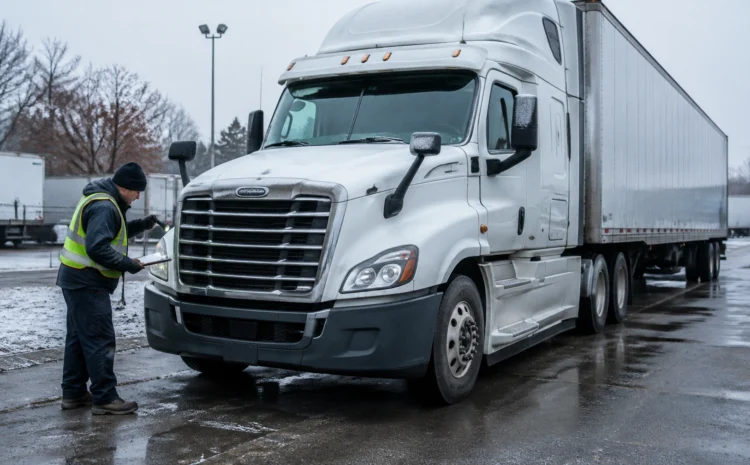
Winter Prep for Tri-State Fleets: 7 Checks Before the First Freeze
The first freeze can expose problems that went unnoticed during warmer months. A battery that started reliably in October may struggle in December. Moisture that stayed harmless in an air system can freeze overnight. A tire with acceptable tread in dry weather may not provide the same margin on a wet, icy New Jersey road.
For commercial fleets, winter preparation is more than a quick fluid check. It is a way to reduce no-starts, roadside calls, missed deliveries, and avoidable downtime across the tri-state NJ area.
Start inspecting trucks several weeks before the first sustained freeze. The following seven checks cover the systems most affected by cold weather.
1. Verify Coolant Concentration and Cooling-System Condition
Coolant does more than prevent overheating. It also protects the engine and cooling system from freezing when temperatures drop below 32°F.
A proper winter inspection should include:
- Testing coolant concentration with the correct equipment
- Confirming freeze protection meets the vehicle manufacturer’s recommendation
- Checking the coolant level and looking for signs of contamination
- Inspecting hoses, belts, clamps, the radiator, and the surge tank
- Looking for dried coolant residue that may indicate a small leak
- Confirming the pressure cap is functioning correctly
A weak coolant mixture can freeze or form slush in the radiator and engine passages. Even before it freezes solid, it may not provide adequate protection during a sharp overnight temperature drop. Cold weather can also make aging hoses brittle and turn a small leak into a major loss of coolant.
Do not simply add antifreeze based on appearance. The correct mixture depends on the truck and coolant already in the system. If the coolant tests poorly, appears dirty, or has exceeded its service interval, schedule a proper service according to the manufacturer’s specifications.
2. Test Batteries, Cables, and the Charging System
Cold weather reduces battery performance while making a diesel engine harder to crank. That combination is why batteries are one of the most common sources of winter fleet downtime.
Before temperatures fall, test every battery in the fleet, not only the trucks that have already shown starting trouble. A battery may still start an engine in mild weather while having very little reserve for a cold morning.
Look for:
- Slow cranking or extended starting time
- Repeated jump-starts
- Corrosion around terminals
- Loose or damaged battery cables
- Flickering lights or intermittent electrical accessories
- Dimming headlights at idle
- Charging-system or battery warning lights
A complete test should include battery condition, starter draw, alternator output, and voltage drop across the cables. Cleaning a corroded connection may solve one problem, but a weak alternator or high-resistance cable can continue draining batteries.
Schimpf’s Garage provides electrical and battery services for commercial vehicles and can help identify whether a starting problem is caused by the battery, starter, alternator, or wiring. Addressing the issue before the first cold snap is less disruptive than dispatching a mobile repair after a truck will not start.
3. Inspect DEF Level, Heating, and Warning-System Operation
Diesel exhaust fluid, or DEF, can freeze at temperatures around 12°F. Freezing itself is expected in a properly functioning system; the concern is whether the tank heater, lines, sensors, and control system are working as designed when the fluid thaws.
Before winter, fleet managers should check:
- DEF level and fluid quality
- The DEF tank heater and related wiring
- Lines for cracking, leaks, or crystallized residue
- Dashboard warnings or stored aftertreatment faults
- Sensors that may be reporting inaccurate levels
- Whether the truck has experienced previous derate events
Do not add antifreeze or other substances to DEF. The vehicle’s factory heating system is designed to manage frozen fluid. Keeping the DEF tank at an appropriate level can also help ensure the heater remains effective, but always follow the vehicle manufacturer’s instructions.
Cold weather can turn a minor DEF issue into a major operating problem. A sensor that is already unreliable, a damaged line, or a failed heater may lead to warning messages and an engine derate at the worst possible time. Schimpf’s Garage handles heavy-duty aftertreatment system service as part of commercial diesel repair.
4. Service the Air Dryer and Remove Moisture
This check is specifically about moisture control during freezing weather. Moisture that remains in the air system can freeze in valves, lines, or other components overnight and create an early-morning operating problem.
Have the air system checked for:
- An air dryer cartridge that is due for replacement
- Excessive water or oil in the air tanks
- Damaged air lines and fittings
- Leaks that allow the system to cycle excessively
- Moisture collecting in low points
- Warning signs that the dryer is not separating moisture properly
Drain the air tanks as part of the inspection and follow the truck manufacturer’s maintenance schedule for the dryer. If water repeatedly returns after draining, the problem requires diagnosis rather than repeated draining alone.
Cold weather compounds existing air-system weaknesses. A small leak, saturated dryer, or damaged fitting may not prevent operation in mild conditions, but freezing moisture can restrict airflow and leave a truck stuck before the route begins.
5. Check Tire Pressure, Tread, and Alignment
Tires are critical on wet, slushy, and icy tri-state roads. They also lose pressure as temperatures fall, roughly 1 PSI for every 10°F drop in temperature. A tire that was correctly inflated during a warm afternoon may be underinflated on a freezing morning.
Inspect every tire for:
- Correct cold inflation pressure
- Tread depth and uneven wear
- Cuts, sidewall damage, and bulges
- Valve-stem leaks
- Irregular wear caused by suspension or alignment problems
- Dual-tire spacing and debris between tires
Many fleets use 4/32-inch tread depth as an internal winter replacement guideline, but the correct threshold should match your company policy, tire manufacturer guidance, and operating requirements. Tires with uneven wear should not be treated as a tire-only issue. Pulling, vibration, or shoulder wear may point to a suspension or alignment concern.
Schimpf’s Garage offers tires, wheels, and alignment services, including mobile alignments for heavy-duty commercial vehicles. Laser alignment service at the truck’s location can help reduce downtime when taking a unit out of service for a shop visit is difficult.

6. Test Block Heaters and Cold-Starting Equipment
A block heater is only useful if it works and the truck has a safe, reliable way to connect it. Test heaters before they are needed, especially on vehicles parked outside overnight.
Check:
- Block-heater cord condition
- Plug and connection points
- Heater continuity or electrical operation
- Coolant level and evidence of air in the cooling system
- Battery condition and starting performance
- Engine oil grade against the manufacturer’s recommendation
Follow the truck manufacturer’s instructions for when to use the block heater and how long to operate it. In especially cold conditions, fleets may use a timer to warm the engine before a scheduled departure rather than leaving the heater connected continuously.
Cold starts place additional strain on the starter, batteries, belts, and engine oil. If a truck needs repeated cranking, starting fluid, or multiple attempts to fire, do not make that the normal winter procedure. Investigate the cause before a harder freeze creates a no-start.
For older equipment, also inspect approved starting aids and controls. Never use an improvised method or starting fluid procedure that is not compatible with the engine.
7. Restore Wipers, Defrosters, Lights, and Visibility
Shorter daylight, freezing rain, road spray, and salt quickly reduce visibility. Drivers need more than a functioning windshield wiper motor; they need clear glass, working defrosters, and lights that remain visible through winter grime.
Inspect and replace as needed:
- Wiper blades that streak, chatter, or leave missed areas
- Windshield washer fluid with a winter-rated freeze point
- Blocked washer nozzles
- Defroster airflow and temperature
- Cab and sleeper heater operation
- Headlights, brake lights, marker lights, and clearance lights
- Mirrors and mirror heaters
- Door seals and locks that may freeze
Road salt can coat lenses and mirrors within a single trip. Make cleaning lights and glass part of the driver’s daily winter walk-around, not an occasional shop task. Drivers should also report weak heat, slow defrosting, or a windshield that repeatedly fogs from the inside. Those may indicate a heating, ventilation, or electrical problem that becomes more serious during a storm.
Put the Checklist on the Maintenance Calendar
Winterization works best when it is scheduled by unit, documented, and completed before the first major cold snap. Start with the trucks that run overnight, travel long distances, or operate in locations where a breakdown would create the greatest disruption.
Schimpf’s Garage provides fleet maintenance services, including routine inspections, diagnostics, heavy-duty diesel work, electrical repairs, tires, alignments, and mobile service. Our team works on semis, box trucks, dump trucks, equipment, and personal vehicles, with in-shop and mobile options available for commercial customers.
With over 60 years of combined experience, a 3 year/36,000 mile warranty on parts and labor, and membership in the Find Truck Service® network, we help fleet operators plan repairs clearly and keep vehicles moving.
If you are searching for fleet service near me, heavy duty truck repair near me, or commercial truck repair near me in the tri-state NJ area, schedule a winter inspection before the first freeze. Contact Schimpf’s Garage at 856-280-1274 or request an appointment online.