Road Salt Season: What a Tri-State Winter Does to Your Truck’s Undercarriage and Air System
In mid-October, winter may still feel a few weeks away, but the first freeze is only about four to six weeks out. For heavy-duty trucks, that’s a useful window to look beneath the chassis before road salt and slush become a routine part of every trip.
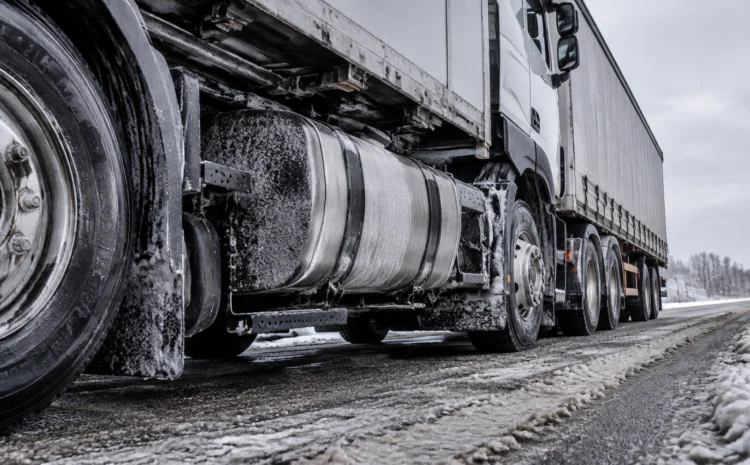
Salt doesn’t usually cause a breakdown all at once. It collects on exposed metal, stays in seams and brackets, and works away at components over repeated wet-and-dry cycles. A small patch of surface corrosion can become a seized adjuster, a leaking connection, or a weakened mount if nobody catches it.
For truck owners and fleet managers in the tri-state NJ area, a focused undercarriage inspection now can help uncover salt-related wear before deep winter makes repairs less convenient.
Why road salt is hard on truck components
Road salt dissolves in water and forms a brine that clings to the underside of a vehicle. Spray from wet roads carries it into places that are difficult to see during a quick walk-around: behind brackets, around fasteners, along frame rails, and among suspension and wheel-end components.
As the water evaporates, salt residue remains. The next wet trip reactivates it. This repeated exposure can speed corrosion, especially where coatings are damaged or moisture and debris become trapped.
The key is not to treat every orange-brown mark as an emergency. Light surface rust is different from deep pitting, flaking scale, cracks, loosened mounts, or corrosion that has reduced a component’s strength. A close inspection helps distinguish normal exposure from deterioration that needs repair.
Where salt damage can create problems
Brake chambers and slack adjusters
Brake chambers, their mounting hardware, pushrods, and slack adjusters are exposed to road spray. Corrosion around the chamber shell or mount can make inspection and service more difficult. A slack adjuster that is badly corroded or seized may not move as intended when checked or serviced.
Brake linings and related hardware deserve attention, too. Corrosion in brake assemblies can contribute to mechanical problems, including deterioration at the shoe-and-lining interface. Don’t rely on an exterior glance to judge the condition of hidden brake parts.
If inspection finds a brake component that is loose, damaged, leaking, or not operating correctly, arrange a qualified evaluation promptly. Salt damage does not automatically mean a truck will be placed out of service, but a safety-related defect can become a compliance issue. Federal requirements call for vehicles to be maintained in safe and proper operating condition, and brake tubing and connections must meet applicable rules. See 49 CFR § 396.3 and 49 CFR § 393.45.
Air tanks, lines, fittings, and drain valves
Salt on the outside of an air tank, its brackets, lines, or fittings can lead to external corrosion. Look for deep pitting, damaged supports, loose fittings, chafed hose coverings, and signs of leakage. Corrosion around a drain valve can also make it difficult to operate or maintain.
There are two different moisture concerns here. Salt spray attacks the outside of the air system. Separately, moisture in compressed air can collect inside reservoirs. If water is left in a tank, it can contribute to internal corrosion and may freeze in cold conditions. A drain that is corroded or stuck can make routine moisture management harder.
Keep air-system checks aligned with the truck and component manufacturers’ procedures. An air dryer helps manage moisture, but it does not make reservoir checks unnecessary. For more on air-system moisture and contamination, consult the component maker’s guidance, such as this Bendix technical bulletin.
Frame, crossmembers, wiring, and suspension
Frame rails and crossmembers can hold salt and wet debris around seams, brackets, and fasteners. Look for more than discoloration: flaking scale, deep pitting, cracked or weakened mounts, and areas where corrosion appears to be affecting structural integrity need professional attention.
Electrical connectors and wiring also face winter exposure. Salt and moisture around a connector can contribute to corrosion or interfere with a reliable connection, especially if a seal or wire covering is damaged. Spring and leaf components, hangers, and related suspension hardware should be checked for cracks, severe scaling, or looseness.
At the wheel ends, inspect exposed hardware and surrounding areas for corrosion, damaged seals, and signs of leakage. These components work under heavy loads; visible deterioration should be assessed rather than covered up.
What corrosion can mean for inspections and safety
Corrosion is not a single automatic out-of-service finding. The concern is what it has done to the part. A corroded surface becomes a safety and inspection issue when it contributes to conditions such as a leaking air connection, damaged or improperly supported brake tubing, restricted airflow, a loose chamber, defective brake hardware, or structural weakness.
That’s why “it still seems to drive fine” is not a dependable inspection method. A truck may show no obvious change to the driver while a hidden component continues to deteriorate. If you notice an air leak, a brake concern, or visible damage to a safety-related part, have it checked before the next haul. For a better understanding of the rules, review the federal inspection, repair, and maintenance requirements.
How to limit salt-related damage this winter
A few targeted habits can reduce salt buildup and help you spot trouble earlier:
- Start with a pre-winter undercarriage inspection. Ask for a close look at brake hardware, chambers and mounts, air tanks and supports, lines and fittings, frame and crossmembers, wiring, suspension, and wheel ends.
- Wash away residue after salt exposure. Rinse the underside, frame, suspension, and wheel-end areas after storms or heavily salted-road trips when practical. Use care around brake chamber vents, electrical connectors, and air-system openings; don’t force water into them.
- Look for changes, not just color. Deep pits, flaking scale, cracks, loosened mounts, worn hose coverings, and fresh leaks matter more than a thin layer of surface rust alone.
- Keep air-system maintenance on schedule. Follow the vehicle maker’s procedures for reservoir draining and air-dryer service. If a drain valve is stuck or corrosion is substantial, have it assessed rather than forcing it.
- Document findings across the fleet. Note inspection dates, areas of concern, repairs, and recurring corrosion. A consistent record helps fleet managers plan maintenance instead of reacting to a roadside failure.
These steps aren’t a substitute for a proper brake or chassis inspection. They’re a way to make corrosion easier to manage, and to catch deterioration before it turns into lost time.
Schedule a salt-season inspection before deep winter
A little attention before the first freeze can make a difference when winter roads begin leaving a film of salt on every trip. Schimpfs Garage LLC in Somerdale provides heavy-duty truck repair for semis, box trucks, dump trucks, and equipment, including brake repair service, suspension work, inspections, diagnostics, and mobile repairs. Our brake, suspension, and steering services and fleet services can help owners and managers address wear before it becomes an avoidable disruption. When an on-site repair is the better fit, learn more about mobile heavy-duty truck repair.
If you’re searching for heavy duty truck repair near me or commercial truck repair near me in the tri-state NJ area, call Schimpfs Garage at (856) 280-1274 or book an appointment. We’ll help you take a closer look at salt-season corrosion and plan the repair work your truck or fleet needs.